Wondering which part of Greenwich actually fits your lifestyle best? For luxury buyers, that is usually the real question. If you are weighing privacy, convenience, or waterfront living, understanding how Greenwich neighborhoods compare can save you time and help you focus on the right shortlist from the start. Let’s dive in.
Greenwich Luxury Living at a Glance
Greenwich offers three distinct luxury lifestyle categories: backcountry estate living, in-town convenience, and coastal residential neighborhoods. Each comes with a different daily rhythm, housing pattern, and set of tradeoffs.
A simple way to frame your search is this: most luxury buyers in Greenwich are balancing land, walkability, or waterfront access. Once you know which of those matters most to you, the map gets much easier to read.
Backcountry Greenwich: Privacy and Land
If your priority is space, backcountry Greenwich is often the first place to look. Areas such as North Greenwich, Round Hill, Stanwich, Khakum Wood, and the North Street corridor are known for a lower-density residential setting shaped by large lots and natural land features.
Town planning documents emphasize preserving rural character in the backcountry, including open land, wooded areas, streams, rugged topography, and rock outcroppings. In practical terms, that supports the estate feel many luxury buyers want when privacy is the top priority.
What the Backcountry Feels Like
This is the part of Greenwich where long driveways, gates, and a compound-like setting tend to make the most sense. The housing stock is generally more individualized, with a history of significant estates and distinctive architecture.
Historic examples help explain the character. Khakum Wood included major estate properties, while larger backcountry estates such as Conyers Manor and Old Mill Farm reflected a tradition of substantial homes on expansive land.
Daily Life in Backcountry Greenwich
The tradeoff for privacy is convenience. This is the most car-dependent part of town, and errands, village centers, and train access are usually farther away than they are in central or shoreline neighborhoods.
That said, buyers who value outdoor space often see this as a feature, not a drawback. Babcock Preserve, for example, offers 300 acres of forested open space with hiking trails and bridle paths, reinforcing the backcountry’s land-oriented lifestyle.
Best Fit for Backcountry Buyers
Backcountry Greenwich is often the right fit if you want:
- Multi-acre property
- Maximum privacy
- A quiet residential setting
- Space for a compound feel
- Separation from town activity
If walkability matters less than acreage and discretion, this is usually the strongest match.
In-Town Greenwich: Convenience and Access
If you want a shorter daily routine, central Greenwich often stands out. This area includes neighborhoods and streets near Greenwich Avenue, Putnam Avenue, Milbrook, and the station-adjacent core.
The town describes downtown Greenwich as one of its major shopping areas, and Greenwich Avenue is identified in official project materials as an iconic shopping and dining destination in central Greenwich. For many buyers, that translates into a more practical day-to-day home base.
What the In-Town Area Feels Like
In-town Greenwich has a more layered streetscape than the backcountry. Rather than a uniform estate setting, you will find a mix of architectural styles, including Italianate, Colonial Revival, Classical Revival, Richardsonian Romanesque, Beaux Arts, Georgian Revival, and Art Deco buildings in the central districts.
That variety gives the area a more historic and mixed visual character. For some buyers, that creates a more connected, lively feel than the more secluded backcountry enclaves.
Milbrook and the Central Core
Milbrook is one of the better-known luxury in-town areas. It was created in the 1920s as a residential park on the former Milbank estate, with its own golf course, tennis courts, and private country clubhouse.
For buyers comparing options, Milbrook can offer a blend of central access and established residential character. It often appeals to those who want convenience without giving up a strong sense of place.
Daily Life in In-Town Greenwich
The biggest advantage here is ease. Official town improvements along Greenwich Avenue and Elm Street were designed to improve safety, accessibility, and the pedestrian experience in a busy retail corridor, which supports the area’s walkable appeal.
If you expect to split time between Greenwich and Manhattan, this location often simplifies the routine. Access to restaurants, retail, services, and the train tends to be more straightforward than in the backcountry.
Best Fit for In-Town Buyers
In-town Greenwich is often best if you want:
- Walkability to shops and dining
- Easier train access
- A more efficient daily routine
- A central location close to town services
- Historic architecture in a mixed streetscape
If convenience matters more than having the largest parcel, central Greenwich deserves a close look.
Coastal Greenwich: Shoreline Lifestyle and Village Feel
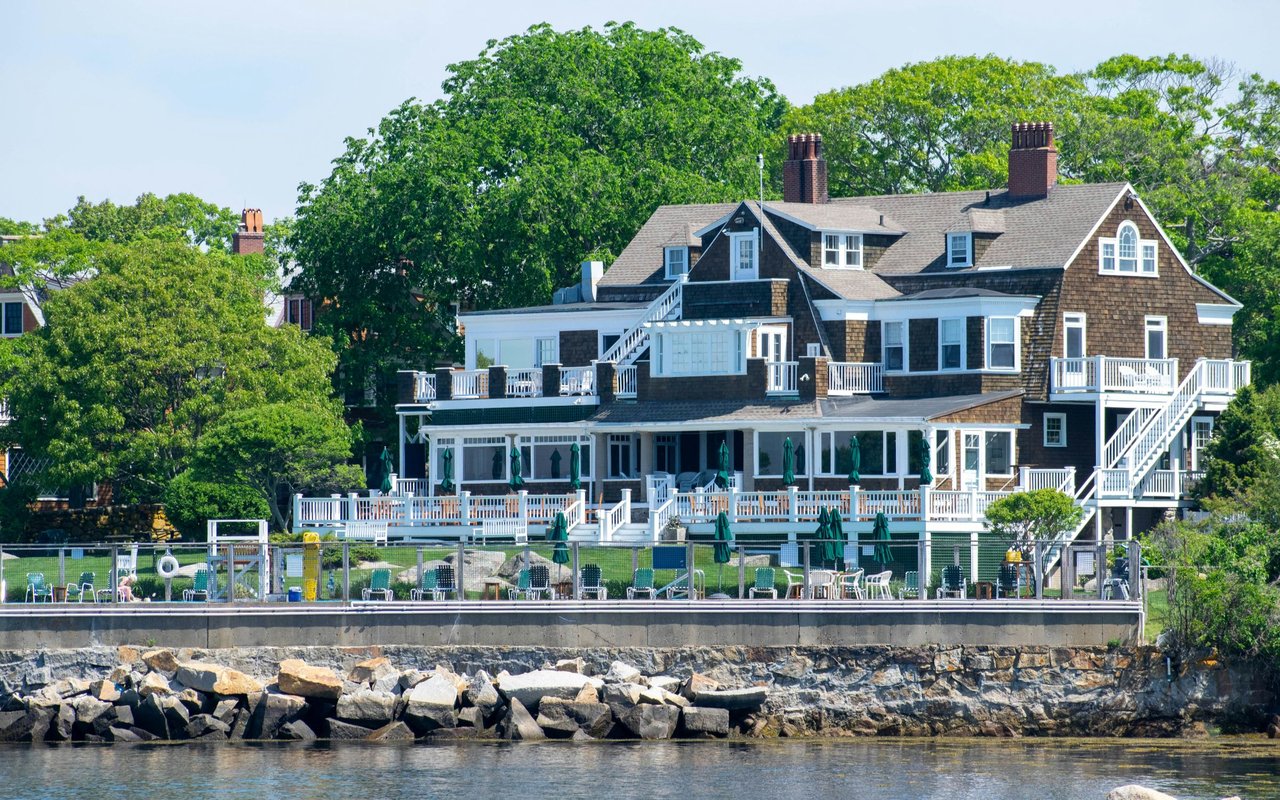
If your vision of Greenwich includes water, parks, and a village-centered setting, coastal neighborhoods may be the strongest fit. The town’s shoreline identity is central to its character, with Long Island Sound, harbors, and coves playing a major role in how these areas feel.
Luxury buyers often focus on Old Greenwich, Riverside, Belle Haven, and parts of Cos Cob when comparing shoreline options. Each offers a slightly different version of coastal living.
Old Greenwich and Riverside
Old Greenwich is the town’s original settlement and has long had a strong shoreline identity. Riverside also developed with a distinct commuter and summer-home history, and town planning documents describe Old Greenwich, Riverside, and North Mianus as a distinct eastern area with a strong identity.
For buyers who need commute practicality, these neighborhoods stand out. Planning documents note direct Metro-North service from both Riverside and Old Greenwich to Grand Central, along with Route 1 and bus service along key local corridors.
Belle Haven and Cos Cob
Belle Haven has a long history as a planned residential park and is often associated with a more private, club-oriented residential setting. Cos Cob, especially along its waterfront edge, offers a more maritime character with a historically mixed housing pattern.
These are not interchangeable areas, which is why it helps to compare them in person. Even within coastal Greenwich, the feel can shift from village-centered to more private and enclosed depending on the neighborhood.
Parks, Water, and Everyday Lifestyle
The shoreline lifestyle is about more than the house itself. Greenwich Point Park in Old Greenwich is a 147.3-acre town-owned beach and recreation facility, while Binney Park in Old Greenwich and Schongalla Nature Preserve in Riverside add walking paths, trails, and scenic outdoor space.
For many luxury buyers, that changes how the neighborhood functions day to day. Access to water, open space, and village amenities can shape the lifestyle as much as the property itself.
Coastal Tradeoffs to Consider
Waterfront and near-water living also require a resilience conversation. Greenwich’s coastal resiliency assessment examines sea-level-rise and coastal flooding impacts at facilities including Mill Pond Park, Bruce Park, Binney Park, and Greenwich Point Park.
That does not make coastal buying less appealing, but it does mean buyers should think carefully about location-specific exposure and long-term property management. In shoreline Greenwich, lifestyle and resilience often go hand in hand.
Best Fit for Coastal Buyers
Coastal Greenwich is often the right fit if you want:
- Beach or boating access
- A village-style setting
- Parks and shoreline recreation nearby
- An easier commute than the backcountry
- A residential neighborhood with a strong water-oriented identity
If you want shoreline living without giving up all convenience, Old Greenwich and Riverside are often practical places to begin.
How Luxury Buyers Can Narrow the Search
If you are comparing Greenwich neighborhoods for the first time, start with your non-negotiables. Most searches become clearer when you decide what matters most in your everyday life, not just what looks appealing on paper.
A simple framework can help:
- If you want maximum privacy and land, start with North Greenwich, Round Hill, Stanwich, and Khakum Wood.
- If you want the easiest daily routine, focus on Greenwich Avenue, Putnam Avenue, Milbrook, and the station-area core.
- If you want shoreline access with commute practicality, begin with Old Greenwich, Riverside, Belle Haven, and well-located parts of Cos Cob.
This is where strategy matters. The right neighborhood is usually the one whose tradeoffs line up best with how you actually want to live.
What Matters Most in Greenwich
Luxury buying in Greenwich is rarely about finding a single perfect neighborhood. It is about choosing the version of Greenwich that best supports your priorities.
If you want discretion and acreage, the backcountry usually leads. If you want access and efficiency, central Greenwich often wins. If you want water, parks, and a village feel, the shoreline neighborhoods deserve your attention.
The most efficient search starts with honest priorities and a clear neighborhood lens. If you want help refining your shortlist and comparing Greenwich with precision and discretion, connect with C T Luxe Team.
FAQs
Which Greenwich neighborhoods are best for luxury buyers seeking privacy?
- Buyers focused on privacy and land often begin with North Greenwich, Round Hill, Stanwich, and Khakum Wood, where the setting is lower density and more estate-oriented.
Which Greenwich neighborhoods are best for luxury buyers who want walkability?
- Buyers who prioritize walkability and convenience often focus on central Greenwich near Greenwich Avenue, Putnam Avenue, Milbrook, and the station-adjacent core.
Which Greenwich neighborhoods are best for luxury buyers who want waterfront living?
- Old Greenwich, Riverside, Belle Haven, and parts of Cos Cob are common shoreline options for buyers who want water access, coastal character, or a village-centered lifestyle.
Is backcountry Greenwich more car-dependent than central Greenwich?
- Yes. The backcountry is generally the most car-dependent part of town, while central Greenwich offers easier access to retail, dining, services, and train connections.
What should luxury buyers consider about coastal Greenwich properties?
- In addition to lifestyle benefits, coastal buyers should consider resilience factors such as sea-level-rise and coastal flooding exposure, which are part of the town’s coastal planning and assessment work.